Rotten Tomatoes
Submit search Movies Tv shows RT App News Showtimes

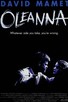
Oleanna

Play trailer Poster for Oleanna 1994 1h 29m Drama Play Trailer Watchlist
Watchlist Tomatometer Popcornmeter
56% Tomatometer 18 Reviews 60% Popcornmeter 1,000+ Ratings
Flustered college student Carol (Debra Eisenstadt) visits John (William H. Macy), one of her professors, and asks how she can pass his class. The narcissistic instructor barely seems to notice her presence, and goes off on tangents relating to his own personal philosophies and problems while failing to answer the pupil. Later, a more assured Carol returns and accuses John of sexual harassment. The professor is baffled, but Carol remains steadfast in her claim, and their feud escalates nastily.
Watch on Fandango at Home Stream Now

Where to Watch

Oleanna

Critics Reviews

View More
Jonathan Rosenbaum Chicago Reader 06/07/2022
3/4
To my mind, both characters come across as equally odious and equally tragic–so much so that one can see them only as different generational and gender-specific expressions of the same character flaws and the same perverse will to power... Go to Full Review
Roger Ebert Chicago Sun-Times 01/01/2000
2/4
To my astonishment, it is not a very good film. I am not sure why. Go to Full Review
David Nusair Reel Film Reviews 10/28/2022
2/4
Oleanna‘s effectiveness is increasingly stymied by a grating, nails-on-a-chalkboard turn by Eisenstadt that slowly-but-surely transforms the picture into an intolerable experience... Go to Full Review
Brian D. Johnson Maclean's Magazine 10/09/2019
Oleanna is less fanciful. But it, too, erects a wealth of clever dramatic detail on a contrived foundation as sound as the San Andreas Fault. Go to Full Review
Emanuel Levy EmanuelLevy.Com 04/30/2011
D
Overly schematic and the least effective screen adaptation of a David Mamet play. Go to Full Review
Mark Bourne DVDJournal.com 04/05/2006
...feels like it was made in a rush, on the cheap, and to fulfill a contractual obligation.... a disappointment compared to his House of Games or Heist, which at least possessed the fall-back position of being intermittently entertaining. Go to Full Review
Read all reviews

Audience Reviews

View More
Alec B @Alec97 01/10/2024 Not as incendiary as the play but that's mostly because you aren't trapped in an enclosed space with the characters and a live audience. I think the movie still works because you're emotionally invested in the tragedy of the piece. Mamet's writing is often derided unfairly as unrealistic and/or impenetrable but the language here is the key to why it doesn't feel too dated. See more dave s @RT68722908 10/15/2022 While David Mamet's Oleanna is sure to spark debate and has its share of interesting perspectives, it ultimately falls flat due to the fact that the only two characters in the film are absolutely repugnant. John (William H. Macy), a college professor, is a condescending narcissist, enamored by his own sense of superiority. Carol (Debra Eisenstadt), one of John's students, is a social justice warrior, unable to take responsibility for her own failures as a student, looking to place them at the feet of her teacher. For ninety minutes, they engage in a pompous dialogue, begging the question: does anyone really communicate like this? Those who bow at the Mamet altar will probably lap this up. More objective viewers will recognize this for what it is – pretentious. See more 08/27/2021 Not as incendiary as the play but that's mostly because you aren't trapped in an enclosed space with the characters and a live audience. I think the movie still works because you're emotionally invested in the tragedy of the piece. Mamet's writing is often derided unfairly as unrealistic and/or impenetrable but the language here is the key to why it doesn't feel too dated. See more 11/30/2020 It seems like the exact kind of play that a rapist would write to try and victimize himself and give society another reason to doubt actual victims coming forward. I don't think Mamet gives the character's arguments equal strength - the professor's argument is much stronger and we are lead to sympathise with him more than we do with Carol in my opinion. Her motives are completely unclear and messy, and the narrative is so unrealistic because the truth is, false accusations are less than 1%. No woman (or man) actually enjoys accusing men of rape, because the process is so dehumanising, time consuming and embarrassing. In a MeToo era, that's a very dangerous and harmful stereotype to project. Mamet also paints a very unfair picture of 'support groups', acting as if they only exist to militarize women into ruining men's lives, rather than genuinely helping victims. And I can't help but feel like the violence at the end was secretly Mamet wanting to vicariously strike out against women in general. The play had potential, but Mamet makes it pretty obvious that he's just trying to demonise the feminist movement and social justice groups in general. I wish he gave both sides of the debate equal attention, it would make it much more compelling and I would respect him more as a writer if he was more neutral in his approach. See more Phil D @PDunstan 08/10/2020 A must watch. Absolutely prescient. See more 07/31/2018 Cinematically, what appears on screen is stilted, confused, and lackluster, a visually indolent experience in a single monotonous setting filled with contrived dialogue expressed colorlessly and unconvincingly. That's unfortunate, too, because the text of the drama itself is extremely provocative, intellectually stimulating, frustrating in its ambiguity and angry in its urgency. It's as little wonder that the play caused such an uproar when it premiered as it is that this film adaptation-ripe for a remake in the current political climate-came and went without stirring the same level of controversy. If the film is any indication whatsoever, the original play must really have been an event to see, something that roused extreme emotions, vastly opposed opinions, and addressed an increasingly important and relevant and necessary topic. It's truly a shame that whatever dialogues and debates the play spurred at the time had ultimately so little material impact-but then again, part of that problem lies with the ambivalence of the text, which takes no side, presents two opposed positions in the extreme, taken to points of absurdity, making its two characters into straw(o)men to heighten the stakes and idealize their differences. In a sense, these are mythical characters, utterly inhuman and unreal, like figures from a Jacobean morality play or classical parable, which works to isolate and emphasize the underlying differend that puts them at such violent odds. Hence the tagline of the movie: "Whatever side you take, you're wrong"-the movie doesn't necessarily seek to answer the problem so much as it hopes to stoke a much needed debate. Both of these characters are reactionary and invested in maintaining, to different degrees and different ends, the institutional structures that Mamet no doubt hopes to ultimately criticize: On the one hand, the professor seeks the power of tenure; on the other hand, the student seeks the protection of the institution-neither really seeks to dismantle or deconstruct (in the Derridean sense) the networks of pedagogical power, but instead to mold the educational structure to their own ends, to replicate or reverse (without upending) preexisting power dynamics. The point that Mamet seems then to be making-to quote another part of the tagline from the film: "Teacher and student or man and woman, how do you draw the line?"-is a call not for understanding or reconciliation, but for reimagining power dynamics beyond the traditional good and evil, right and wrong, powerful and prey dichotomies of power. In the impossible extremity of their positions-the paradigmatically chauvinist pedant versus the stereotypically misandric feminist-it is precisely the vehemence of their polarity, the vastness of their divergence, the false and mythical purity of their dichotomy that illustrates why such binaries are absurd and function finally to strengthen institutional power rather than upset it. In their (often righteous and sometimes merited) anger, the dogmatist and radical don't just reify the standard binary line that undergirds basic power structures, but ultimately (and I think what matters most) cross moral lines themselves, turning vengefully violent and repressive. It is these latter lines that I think matter the most, such that the point is not to draw dividing lines but to not cross them, to not assert power or reproduce its dynamics. See more Read all reviews
Oleanna

My Rating

Read More Read Less WRITE A REVIEW EDIT REVIEW POST RATING
Secrets & Lies 96% 91% Secrets & Lies Watchlist The Neon Bible 55% 45% The Neon Bible Watchlist In Custody 67% 62% In Custody Watchlist Vanya on 42nd Street 89% 79% Vanya on 42nd Street Watchlist Discover more movies and TV shows. View More

Movie Info

Synopsis Flustered college student Carol (Debra Eisenstadt) visits John (William H. Macy), one of her professors, and asks how she can pass his class. The narcissistic instructor barely seems to notice her presence, and goes off on tangents relating to his own personal philosophies and problems while failing to answer the pupil. Later, a more assured Carol returns and accuses John of sexual harassment. The professor is baffled, but Carol remains steadfast in her claim, and their feud escalates nastily.
Director
David Mamet
Producer
Patricia Wolff, Sarah Green
Screenwriter
David Mamet
Production Co
Bay Kinescope, Channel Four Films, The School Company, The Samuel Goldwyn Company
Genre
Drama
Original Language
English
Release Date (Theaters)
Nov 4, 1994, Limited
Release Date (Streaming)
Dec 7, 2017
Box Office (Gross USA)
$120.2K
Runtime
1h 29m
Sound Mix
Surround